Kenya’s IEBC is facing mounting political pressure as opposition-linked actors demand sweeping reforms, including scrapping election technology contracts, while government allies warn that confrontational tactics could further weaken an already underfunded and litigation-burdened institution ahead of the 2027 General Election.
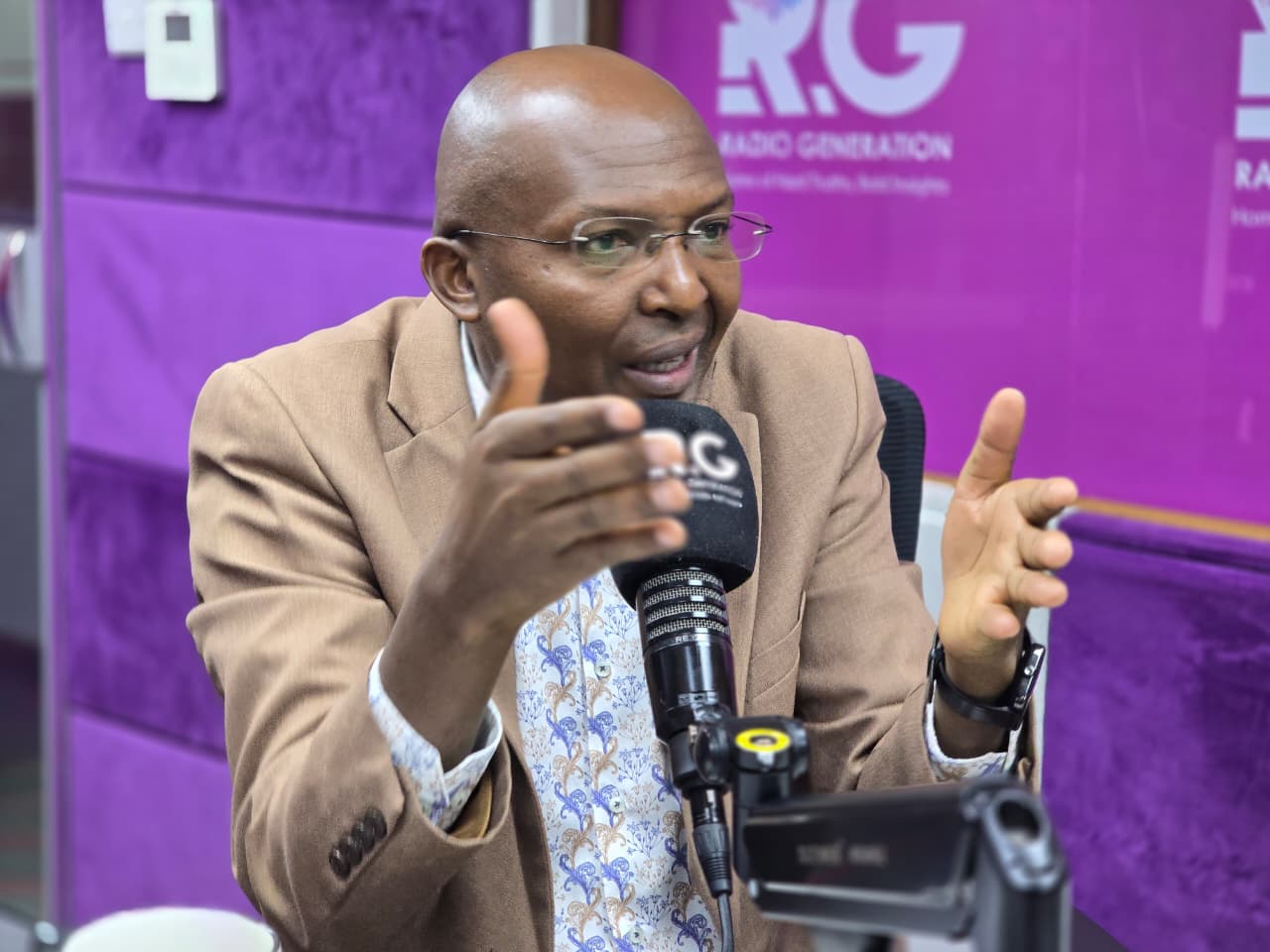
Speaking on a Radio Generation interview on Friday, leadership and governance expert Peter Mbae said the country was already entering an election cycle, warning that confidence in the electoral referee was fragile.
“The stage is set. The players are warming up. The referee has panicked,” Mbae said, adding that the IEBC secretariat had overstepped its mandate in key decisions.
Mbae singled out the extension of the Smartmatic technology contract, arguing that it was done illegally and procedurally without the authority of commissioners.
“Secretariat has no power. IEBC power is vested on the commissioners,” he said, questioning why the same officials who said they could not conduct voter registration without a commission were able to extend a major election technology contract.
This debate comes shortly few days after the resignation of former IEBC CEO, Hussein Marjan by mutual agreement with the Commission, ending his multi-year service at the institution.
The departure which happened on February 3, 2026 was announced as part of a structured transition designed to allow IEBC to recruit a new CEO and maintain institutional continuity ahead of preparations for the 2027 General Election.
Marjan’s association with IEBC began in March 2015 when he joined the electoral agency as Deputy Commission Secretary in charge of Support Services.
He rose through the ranks and became a central figure within the Secretariat, which implements the decisions of the full Commission.
He first took on the role of Acting CEO in September 2017, following the exit of his predecessor, and served in that capacity for nearly five years amid periods when IEBC lacked a full complement of commissioners.
Marjan was formally appointed as IEBC Chief Executive Officer on March 9, 2022, shortly before and during the run-up to the August 2022 General Election.
Mbae said the opposition’s engagement with IEBC was based on irreducible minimums, including the exit of its former CEO, Marjan, cancellation of the Smartmatic contract, vetting of staff and reshuffling of county and regional officers to reflect Kenya’s diversity.
“You can’t have a county where everybody comes from one community manning elections, from the county manager to the end,” Mbae said. “You need to be seen to be a fair arbiter.”
The Governance expert rejected claims that opposition figures intimidated the commission, insisting their visit was cordial and pre-arranged.
“We requested for the appointment. We signed the visitors’ book. We went to the boardroom. It was very cordial,” he said.
He also questioned the ballooning cost of elections, proposing zero-based budgeting at IEBC. “Don’t come and lump a budget you found last year. Pull everything down and start from scratch,” he said, arguing that Kenyans deserved scrutiny of every expenditure item.
On technology, Mbae pushed for local solutions. “We have systems. We have experts. Why are we importing everything?” he asked, saying election systems should be very simple and transparent.
Offering a contrasting view, Fredrick Okang’o, a strategic advisor, acknowledged deep-seated challenges at IEBC but warned against what he described as confrontational tactics.
“The election of 2027 is certain,” Okang’o said, but added that the commission faced paralysis caused by litigation, underfunding and unresolved institutional gaps.
He defended the role of the IEBC CEO under law, noting that “the CEO is the secretary to the commission” and is responsible for implementing policy decisions.
According to him, the absence of commissioners for a prolonged period had stalled critical functions such as voter registration and boundary reviews.
“We are likely to go into the next election with data that is almost a decade old,” he warned, citing failure to conduct boundary reviews under the Constitution.
However, the institution adjusted by appointing an interim Chief Executive Officer, Moses Ledama Sunkuli, to ensure continuity at the Secretariat following the exit of Marjan.
His appointment gives him a temporary role expected to last up to six months or until a substantive CEO is recruited and appointed.
Sunkuli was previously IEBC’s Director of Electoral Operations, bringing extensive institutional experience to the position.
Okang’o criticised demands for mass evictions at IEBC, arguing that reform should be pursued through Parliament and other institutions. “We will not go to IEBC to demand the eviction of the chair, the CEO or managers,” he said.
He said the commission was underfunded, revealing that commissioners had cited a budget deficit of about Sh20 billion.
“What we want to see is an IEBC that conforms to the general principles of the electoral system,” he said, calling for sustained stakeholder engagement.
Okang’o accused political actors of fuelling strategic ambiguity around election technology and procurement. “Those are issues that are strategically ambiguous, because individuals have interest,” he said, urging respect for the rule of law.































Comments
Sign in with Google to comment, reply, and like comments.
Continue with Google